Junior Sail Camp

Sail Camp Program Registration

Summer Sail Camp Program

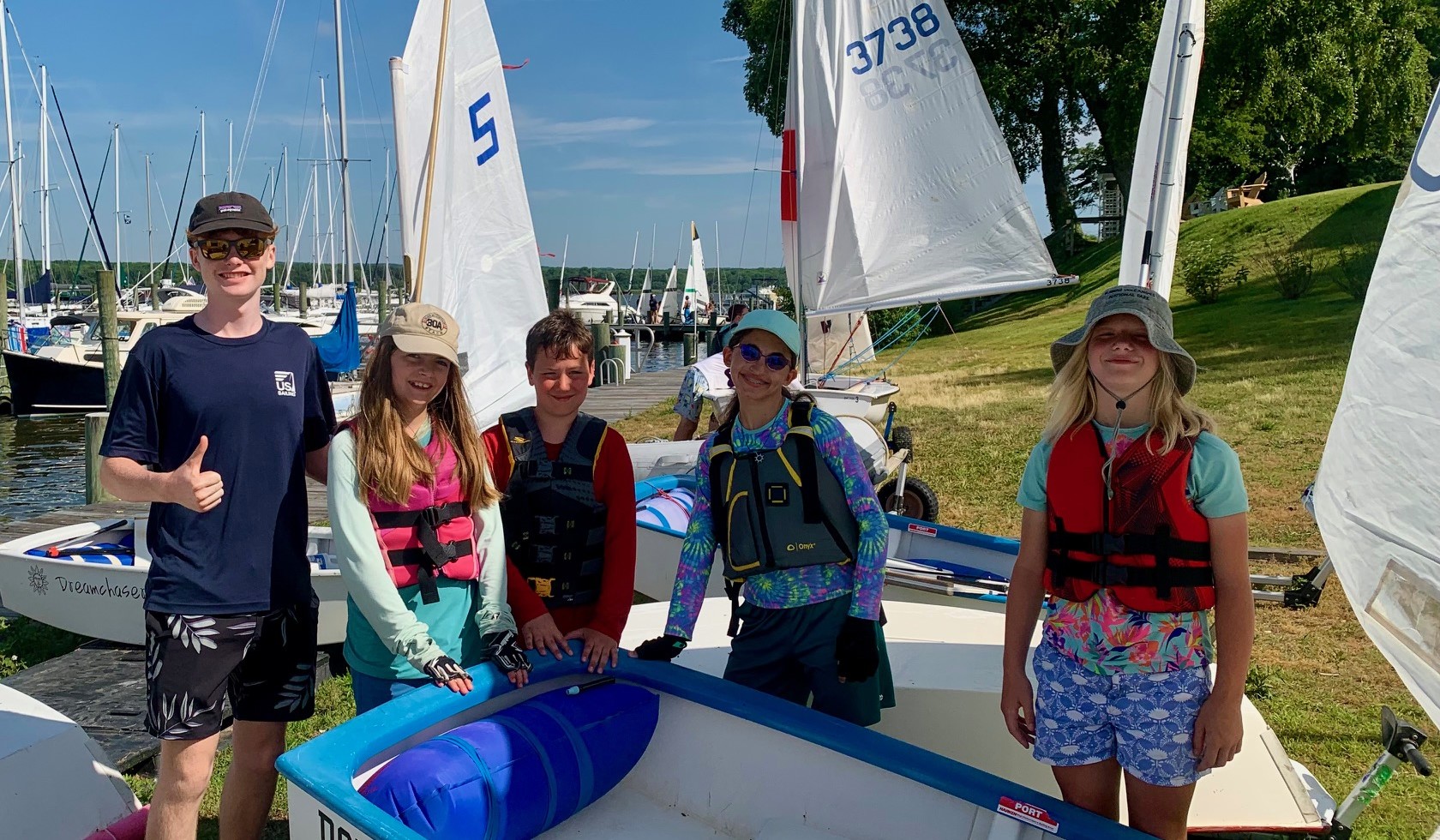
Our popular youth sail camp program features both a learn-to-sail and a racing program. No previous experience or club membership required to participate. The program runs for six weeks starting mid to late June. The program is certified and licensed by the Maryland Department of Health.

Sail Camp Registration Process

Before you begin, it is advisable to have reviewed:

Sail Camp Schedule and Fees

Sail Camp Info and FAQs

Sail Camp Code of Conduct

Follow these steps to register:

  • Complete an online Registration Request Form  REGISTER HERE
  • Wait for the Program Director to approve and confirm your registration request via email.
  • Check your email for your invoice and submit your payment online to secure your space.
  • Finally, complete and submit your sailor’s camp forms.

SAIL CAMP FORM PACKET
Access and submit forms online.
SailCamp

Sailing Groups

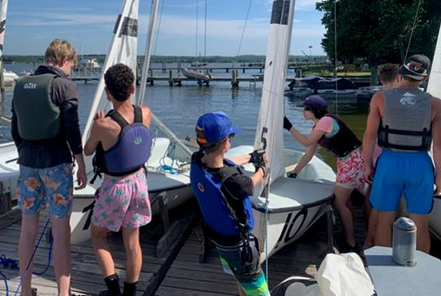
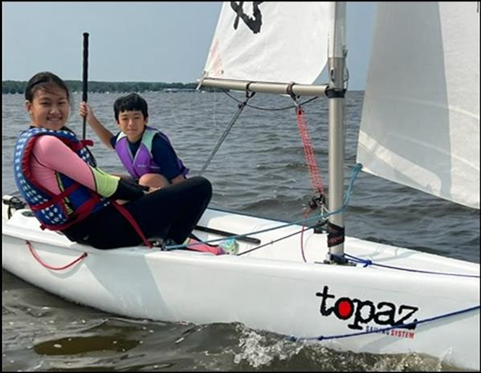
Younger sailors are grouped together and sail on Optimist dinghies. Older sailors start sailing on Topaz dinghies and move to either single-handing on a Laser or double-handing on FJ dinghies as they progress. 

Beginner Sailor - River Rookies (Youth ages 7.5 - 16 years)

Must be 7.5 years by Jan 1, 2026  
No previous experience required.
Intermediate Sailors - River Skippers (Youth ages 8 -16 years)

Sailors who have completed River Rookies or who have previous applicable basic training.
Advanced Sailors - River Captains (Youth ages 9 - 18 years)

Sailors who have graduated the intermediate level who have attained a high level of competence. 
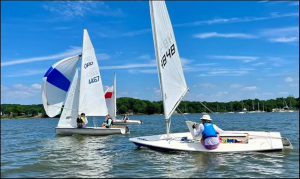
Bay Racers - Advanced Level Sailors (Youth ages 9 -18 years)

Advanced level sailors ready for competition. The Bay Racer Team receive high level coaching and travel to regattas hosted by other clubs around the Bay throughout the summer.
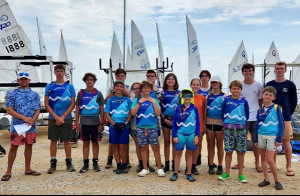
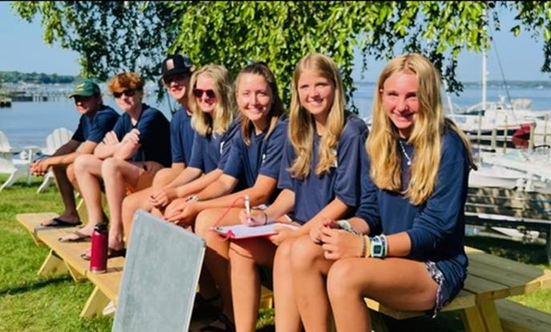
 

Our Staff

All our coaches are carefully selected for their competence as well as a genuine desire to share their knowledge, skills, and enthusiasm for the sport. In most cases, they are already well known to us as graduates of our junior program at NERYC. In accordance with state requirements, they must pass criminal and child safety background checks and be current on CPR/FIRST AID certification. Their stated goal is to lead, to mentor, and to teach, while emphasizing safety, fun, and learning.

In addition, our instructors must have their US Sailing Small Boat Level 1 Instructor certification:

LEVEL 1 INSTRUCTOR CERTIFICATION CREDENTIALS
US Sailing is the national authority and governing organization of the sport of sailing in the US. The Small Boat Level 1 Instructor Certification training course is designed to provide experienced sailors with the knowledge and practical training required to teach safely, effectively, and creatively. The goal of the program is to produce highly qualified sailing instructors. Topics covered in the training course: classroom and on-the-water teaching techniques, risk management, safety issues, lesson planning, creative activities, ethical concerns, and sports physiology and psychology. The candidate’s sailing knowledge, sailing ability, and safety boat skills are reviewed and tested as part of the certification. Course prerequisites require candidates to complete both SafeSport certification and First Aid CPR certification. 


North East River Youth Sailing Foundation

The foundation’s mission is to help make sailing accessible to the community, and it will consider applications for financial assistance for Camp/Racer fees. For more information on opportunities and eligibility, please visit www.nerysf.org

NERYS Foundation


Sail Camp Frequently Asked Questions

What to wear to sail camp
There’s a good chance that sailors will get wet every day. It is recommended sailors wear bathing suit, sailing or board shorts, rash guard or UV protective quick dry shirts, a hat and sunglasses. Please pack a small gear bag with a towel, change of clothes and a sweat shirt. Sailors need closed‐toe water shoes example Tevas, Keens, Crocs, neoprene booties or sailing boots. Shoes must be able to stay on feet whilst sailing and swimming.
Flip flops are NOT acceptable for sailing.
All personal property should be labeled with the sailor’s name.
What must I bring to camp?
Sunscreen – All campers must have sunscreen applied before they arrive in the morning and they must bring sunscreen with them for re-application during the day.
Lunch
Participants are required to provide their own lunch in a mini cooler bag
A REFILLABLE environmentally friendly water bottle
ABSOLUTELY NO DISPOSABLE PLASTIC BOTTLES PLEASE.
Must I bring my own life jacket?
NERYC can provide a life jacket, but we strongly encourage sailors to use their own USCG approved TYPE 3 life jacket.
Do NOT bring
We understand the requirement for cell phones; however, sailors will be expected to keep them in their bags during classes and out on the water. Do not bring tablets with video games. They will not have any opportunity to make use them and we would rather they enjoyed the benefits of social interaction.
When do I get my T- Shirt?
Shirts are handed out at the end of each session together with instructor reviews and awards.
If it's raining is there camp?
We do not cancel for inclement weather. Safety always comes first, and our staff review forecasts routinely monitor radar for approaching storms. Except for lightening, thunderstorms, high wind conditions, and windless conditions of course, we will sail so come prepared. On these occasions, chalkboard sessions will be extended, and other forms of supervised activity will take place depending on the time available. Please be assured that all our coaches and staff are prepared to supervise activities that are designed to maximize both educational as well as fun value during any ‘no sail periods.
Will there be a swim test?
Sailors will need to pass a swim test on their first day. They will be required to swim a distance of 50 yards and tread water for 2 minutes while wearing a USCG approved Type 3 life vest. This is to ensure sailors are comfortable in the water. Capsize recovery will also be learned and practiced at the start of the session. session.
What about supervision before and after camp?
We do not offer any extended before and aftercare. Staff arrive at 8:30AM and camp is in session from 9am to 4pm Mondays through Thursdays. All campers must be picked up before by 4:30PM.
Can I stay and watch my child sail?
Our experience has shown that young sailors learn their best, progress faster and get the most benefit out of the program without the distraction of a parent. Our coaches also appreciate being able to focus on teaching without distractions during the camp day. If you would like to come at a time when the kids are out on the water for a discreet view, please ask us for permission and an acceptable time.
Is there a lost and found bin?
We do have a lost and found bin and it fills up every week, so we encourage parents to please label everything and to check their children take all their belongings home each day. At the end of each summer season, all unclaimed items will be donated to Goodwill or discarded.
What is Sail Camp Program Membership?
A temporary program membership status is granted to sailors provided and included with registration. It facilitates participation for non-members and gives sail camp families the opportunity to dine in the restaurant as a guest (max 3 times).
Is there any transient dockage while my sailor is at camp?
Yes, at the special camper fee of $35 per day plus $5 per day for power.
How do I become a Family or Junior Member?
Information and applications are available at www.neryc.com. Members enjoy discounted camp fees, and many other benefits.
What does it take to participate in the Junior Racing program?
Sailors who are suitable proficient, and are interested in racing and travel to regattas, should discuss eligibility to participate with Coach and Program Director. Race team members must have a parent or guardian travel transport and accompany them to events
What does the curriculum cover?
Beginner Level – Introduction to sailing basics using Opitmist dinghies for younger sailors, or Topaz dinghies for older sailors. Sailors learn about wind and water awareness, points of sail, rigging, steering,sail trim, tacking and gybing, docking, safety, capsize and recovery, basic navigation and right of way rules, knot tying.
 
Beginners are teamed up with a sailing buddy on the water. Skills are taught through a combination of chalkboard sessions (lectures), visual aids, demonstration, practical drills, games and extensive on the water practice. Some sailors may have to repeat this level before advancing.
 
Intermediate Level – Sailors who have completed Beginner Level or have previous experience. Sailors progress to ‘single handing’ on or Lasers, or continue to develop partnering skills on Topaz or FJ’s as applicable. At this level we build on the basics and work on developing confidence in boat handling, effective sail trim and an overall competence in skills. It is usual for sailors to repeat this level before advanving.
 
Advanced Level – Sailors with a high level of competence ready to take their game to the next level. This level includes: understanding racing tactics and rules plus advanced boat handling, advanced sail trim.
 
Bay Racers / Racing Sailors – Specialized coaching on Opti, Laser and Club 420, with travel to regional regattas during the summer. Travel Team Racers prerequisites for participation are club membership, coach recommendation and Program Director approval. This level includes specialized coaching, boat use when required, and logistical support for participation in regional CBYRA Junior regattas. Fleets: Opti Green (beginner) Opti RWB, Lasers, 420’s. Racers build competitive skills, with practice and competition.